
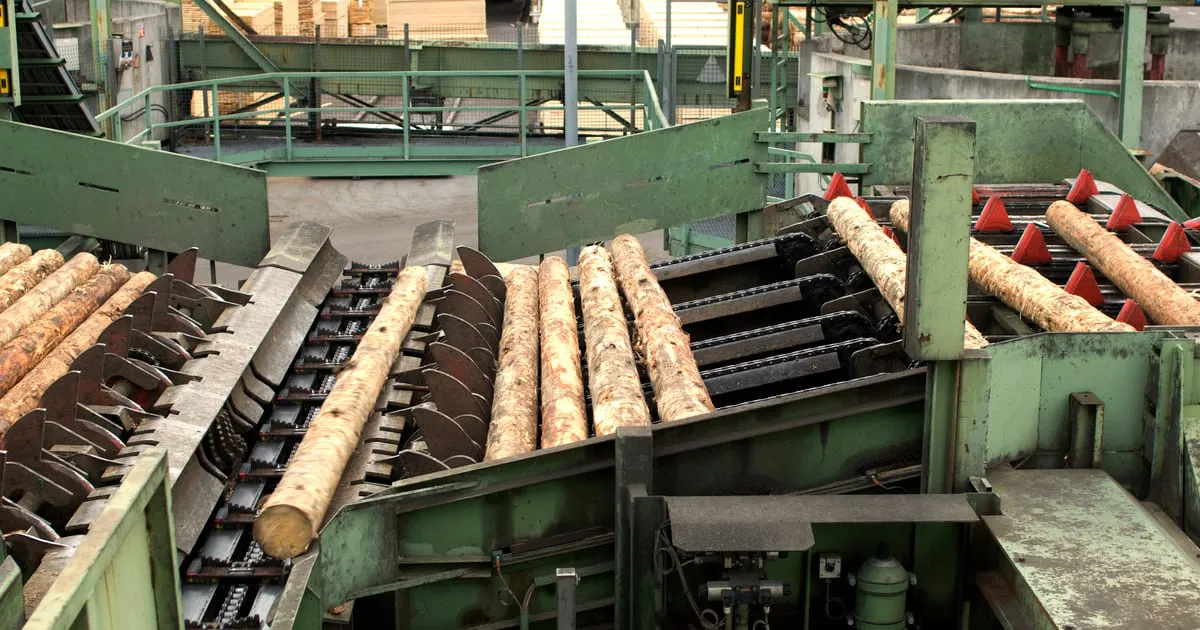
Turning Wood into Value Through Smart Processing
The value of a log is not defined by its size, but by how it is graded and processed.
Contents :
1. The Transformation of the Sawmill Industry
2. Understanding Market Value and Grading
3. Advanced Scanning and Modeling
4. From Forest to Everyday Life
5. Creating More with Less
6. Professional Timber Selection Starts at the Source
The Transformation of the Sawmill Industry
In the past, sawmills relied heavily on experienced craftsmen. Decisions such as where to cut, how to avoid knots, and how to maximize yield were based on years of personal judgment. While valuable, this approach often lacked consistency and efficiency.
Today, the industry has evolved. From steam-powered machines to modern systems integrating X-ray scanning and AI-driven analysis, sawmills have become precision-driven operations. Each cut is no longer just a mechanical action—it is the result of data processing and optimization.
Before cutting begins, it is essential to understand that timber already carries different value levels based on grading systems.
For softwood, appearance grading is often based on the number and distribution of knots, typically classified into Grade A, B, and C. The trunk section, with fewer knots, is usually the highest grade, while the upper parts of the tree contain more branches and therefore more defects.
For hardwood, grading systems such as NHLA (National Hardwood Lumber Association) classify wood based on clear yield. High-grade categories like FAS are used for premium furniture, while No.1 Common and No.2 Common are suitable for structural or secondary applications.
These grading systems directly influence how the log will be processed and where it will be used.
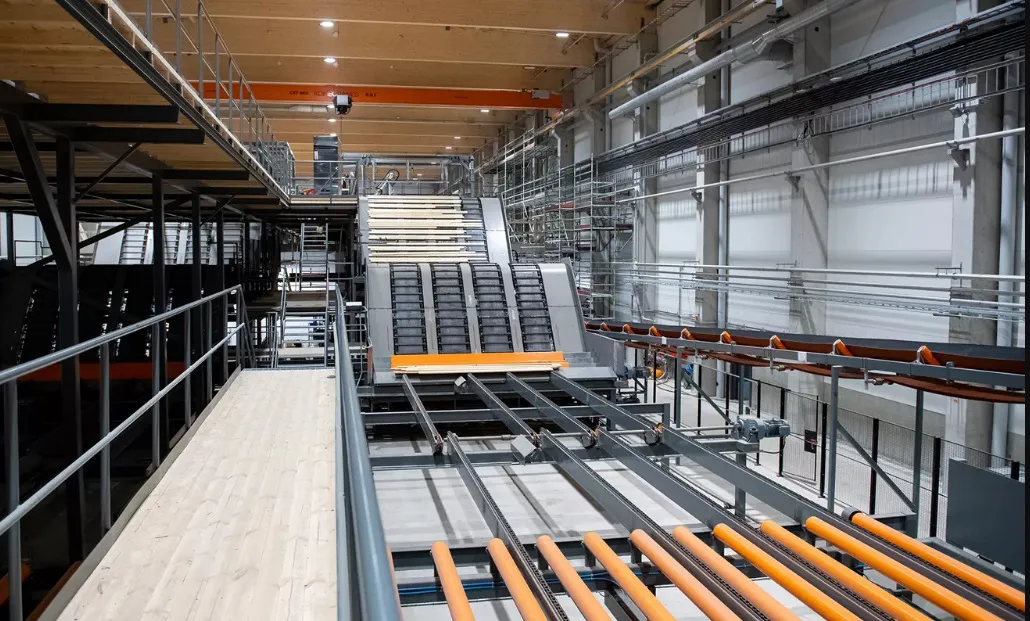
Turning Timber into Data
When logs enter a modern sawmill, they go through a highly automated process. The workflow typically includes:
- Debarking to protect cutting tools and improve accuracy
- Sensor-based scanning to analyze size and shape
- Primary cutting to convert logs into squared timber
- Trimming to remove defects
- Sorting based on size and grade
At this stage, timber is no longer just a material—it becomes a set of data points used to guide decision-making.
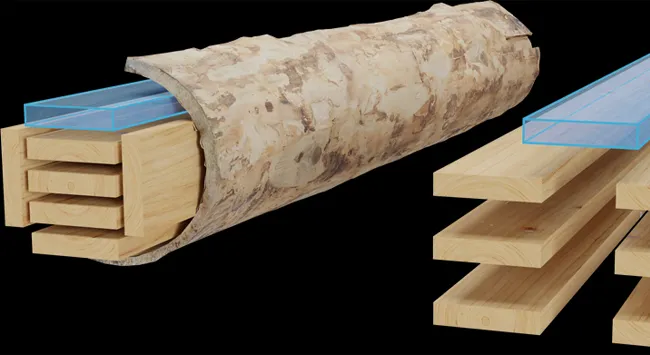
One of the key technologies driving this transformation is 3D laser scanning, which allows logs to be digitally modeled with high precision.
The system quickly captures information such as diameter, curvature, and surface characteristics. When combined with X-ray scanning, it can also detect internal features like knots, cracks, and density variations.
With additional technologies such as LiDAR and image recognition, both surface and internal defects can be identified accurately. The system then simulates multiple cutting scenarios and selects the option that delivers the highest value.
This process is similar to a “CT scan” for wood—turning each log into a fully analyzed resource.
Artificial intelligence plays a critical role in evaluating timber value. Using deep learning, AI systems analyze large datasets to recognize patterns such as knots, splits, and defects, and predict the outcome of different cutting strategies.
For example, after introducing AI-driven systems, some sawmills in Canada have improved material yield by approximately 25%, while also reducing raw material waste.
This shift represents a major change in the industry—from maximizing volume to maximizing value. Every cut is now the result of precise calculation and optimization.
Creating More with LessAs global forest resources face increasing pressure, the focus of the sawmill industry has shifted. The goal is no longer to produce more, but to use resources more efficiently.
Today, almost every part of the log is utilized:
- Wood chips can be used for pulp production
- Bark can serve as biomass fuel or landscaping material
- Offcuts can be processed into engineered products such as OSB (Oriented Strand Board)
This near zero-waste approach reflects a responsible use of natural resources. With the support of advanced technology, timber can be used more completely and efficiently than ever before.
Professional Timber Selection Starts at the SourceEvery piece of wood—its color, grain pattern, and structural performance—is the result of a series of precise decisions, from grading to cutting.
Understanding how timber is produced is just as important as selecting the right material for application.
At bestwood, we believe professional wood selection begins with responsible sourcing and deep material knowledge. We are not only a supplier—we are your wood consultant and long-term partner.
From structural timber and decorative materials to specialty panels, from FSC-certified wood to custom sizing solutions, bestwood provides complete and reliable wood solutions.
GET YOUR BEST WOOD FROM bestwood — Moving forward together with a commitment to sustainability.
Read More
 Orient Express | The Moving Palace of Wood Marquetry
 From Zero to Timber | Building Forests from the Ground Up
Related Product
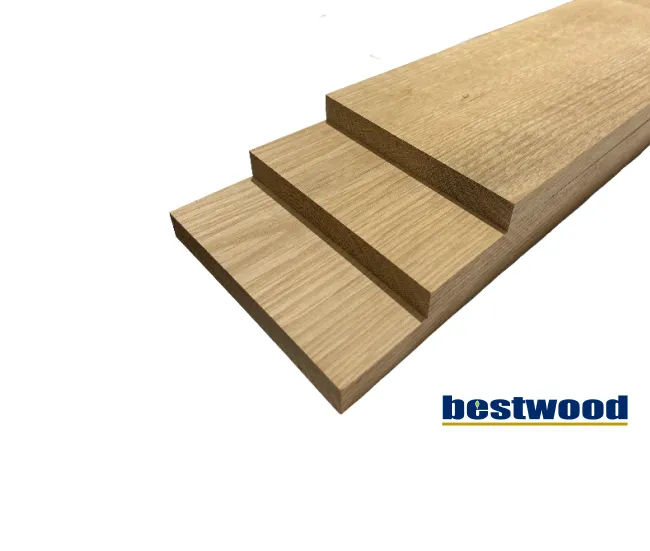 American White Oak
Source:
https://www.purityfamily.com.tw/%E6%9C%A8%E6%9D%90%E7%AD%89%E7%B4%9A/;
https://www.americanhardwood.org/en/american-hardwood/grading-sawn-lumber/the-grades?region=eu;
https://www.youtube.com/watch?v=zH6Lg9D1C34;
https://www.youtube.com/watch?v=b6P3Ef-vlcc;
https://www.purityfamily.com.tw/%E6%9C%A8%E6%9D%90%E7%AD%89%E7%B4%9A/;
https://www.1120.com.tw/product/detail564;
https://www.jsheld.com/insights/articles/sawmills-technological-advances-current-code-environmental-regulations-example-claims-evaluations;
https://www.lesprom.com/de/news/Mets%25C3%25A4_Fibre_introduces_world%25E2%2580%2599s_most_modern_sawmill_in_Rauma_Finland_104162/;
https://www.finnos.fi/en/news/more-efficient-data-to-upm-kaukas-with-finnos-fusion;
https://zh-tw.woodandpanel.com/%E4%BC%8D%E5%BE%B7%E6%96%B0%E8%81%9E/%E6%96%87%E7%AB%A0/smarti%E5%85%AC%E5%8F%B8%E5%AE%89%E8%A3%9D%E6%96%B0%E5%9E%8Bilog-X%E5%85%89%E6%8E%83%E6%8F%8F%E5%99%A8%E4%BB%A5%E6%8F%90%E9%AB%98%E6%8E%83%E6%8F%8F%E7%B2%BE%E5%BA%A6/ https://www.yoshidaseizai.co.jp/column/about_rank.html;


