
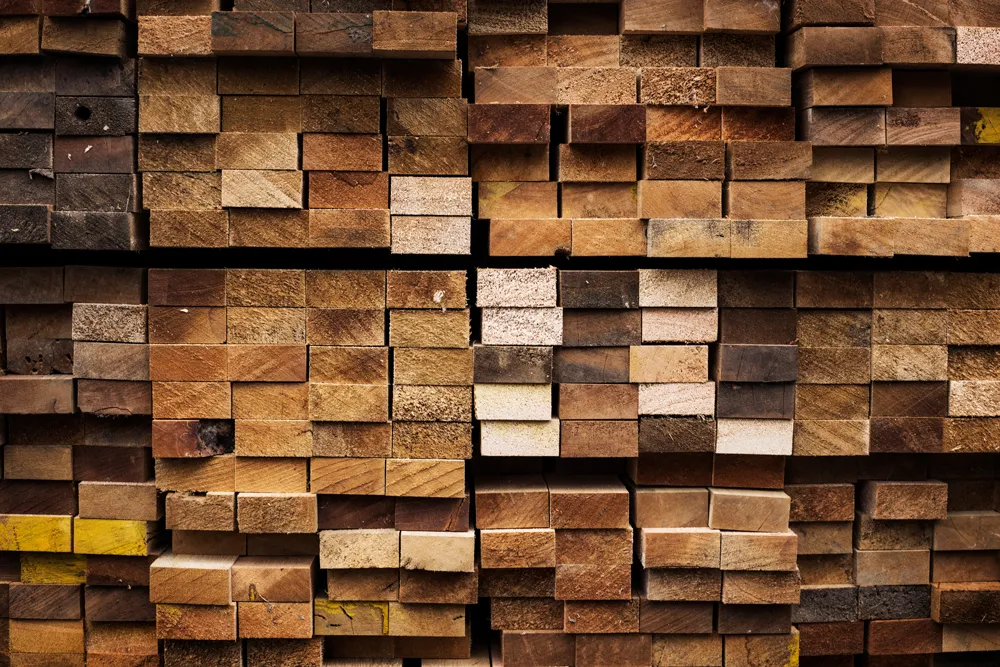
From Timber to Stability | Drying Is the Process That Makes Wood Truly Ready
Aged cheese develops flavor through time, while wood drying allows timber to become stable and ready for use.
Contents :
1. The “Blood” Inside a Tree
2. Wood Drying and Cheese Aging
3. Drying as a Controlled Maturation Process
4. How Timber Drying Works
5. Understanding Moisture Content (%)
6. The Right Moisture Level for the Right Use
7. Professional Wood Selection Begins with Stability
The “Blood” Inside a Tree
Many people believe wood can be used immediately after it is cut into the correct size. In reality, there is another essential step before timber becomes usable: drying.
Freshly sawn wood contains a large amount of moisture stored inside its cells and cell walls. While a tree is alive, this moisture helps transport nutrients throughout the trunk and branches. After harvesting, however, the water does not disappear instantly. It slowly evaporates until the wood reaches balance with the surrounding environment. This process is known as wood drying.
Without proper drying, timber cannot achieve the stability required for construction, furniture, or interior applications.
The drying process of wood is surprisingly similar to the aging process of cheese.
Cheese begins with milk. After bacteria cultures and enzymes are added, proteins separate and form curds. These curds are pressed and then moved into a controlled aging environment. During this stage, moisture gradually moves outward while the internal structure changes over time, creating the cheese’s final texture and flavor.
Wood behaves in a similar way. Moisture inside the timber must leave slowly and evenly. The internal structure of the wood gradually stabilizes as water content decreases.
Just like cheese, the process cannot happen too quickly.
A cheese aged for three months tastes completely different from one aged for eighteen months. If the outer surface dries too fast, the inside moisture becomes trapped, creating pressure that may crack the cheese internally.
Wood follows the same principle.
If timber dries unevenly, the outer surface shrinks faster than the inside, creating tension within the fibers. This can lead to:
For this reason, drying must be carefully controlled so the internal and external moisture levels decrease together.
How Timber Drying WorksThere are generally two main drying methods used in the timber industry:
Air Drying
Wood is stacked in a ventilated outdoor or semi-covered area where natural airflow and sunlight gradually reduce moisture content.
Advantages:
- Low energy use
- No complex machinery required
Limitations:
- Requires large storage areas
- Strongly affected by weather and seasons
- Drying time can range from several months to years
Kiln Drying
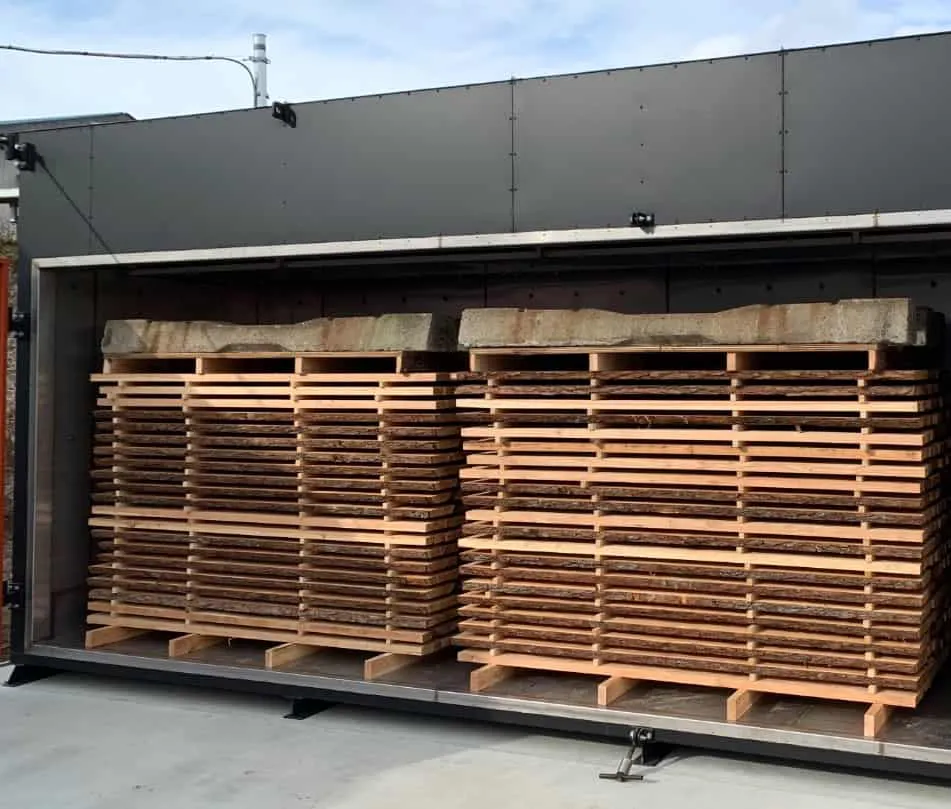
Kiln drying uses a controlled chamber where temperature and humidity are managed by a computerized system.
Modern kilns can use:
- Steam drying
- Vacuum drying
- Conventional heated kilns
Among these, kiln drying is the most widely used industrial method.
Today, AI-assisted systems can monitor moisture content in real time, automatically adjusting drying schedules for different species and thicknesses. What once required months can now be completed in days while significantly reducing the risk of cracking and deformation.
Understanding Moisture Content (%)
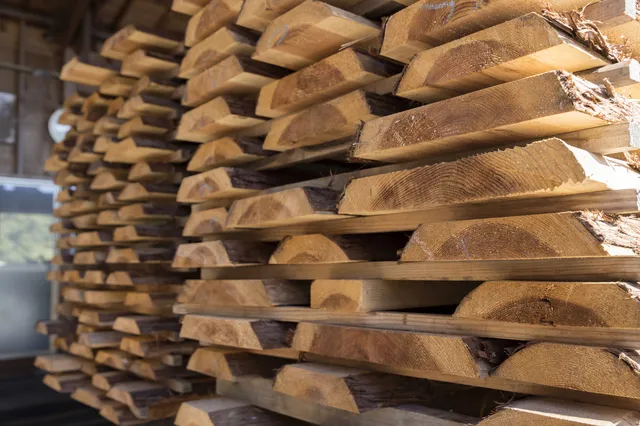
Some manufacturers combine air drying with kiln drying to achieve the required moisture content more efficiently.
The key measurement used in wood drying is moisture content percentage (MC%).
Freshly harvested timber may contain moisture levels above 100%. During drying, this percentage gradually decreases to match the intended application environment.
If wood is not dried properly, it will continue expanding or shrinking after installation, which may cause:
Proper moisture control is one of the most important factors in wood performance.
The Right Moisture Level for the Right UseDifferent applications require different moisture content standards.
For example:
- Structural lumber in North America is typically required to remain below 19% moisture content
- Indoor flooring and furniture are usually controlled between 8–12% for stable indoor performance
- Fine woodworking, instruments, and wood carving often require even stricter moisture control
Different species and applications require different drying strategies. Selecting the right timber is not only about appearance—it is also about understanding how the material behaves in real environments.
Professional Wood Selection Begins with StabilityChoosing properly dried timber improves long-term stability and reduces future problems, especially for structural and interior applications where moisture control is critical.
At bestwood, we believe wood performance starts from source management, proper drying, and professional material selection. From FSC®-certified timber and structural wood to decorative materials and customized cutting services, we help clients find wood solutions that match their actual needs.
GET YOUR BEST WOOD FROM bestwood — Moving forward together with a commitment to sustainability.
Read More
 Wood Biomass Energy | Turning Waste into Renewable Value
 From Zero to Timber | Building Forests from the Ground Up
Related Product
 Hardwood
Source:
https://www.swedishwood.com/wood-facts/about-wood/wood-and-moisture/
https://www.forest-bless.com/column/20230414m/
https://www.pref.mie.lg.jp/ringi/hp/80749046142.htm
https://www.woodtec.co.jp/lab/wood/knowledge/wood5/
https://asahikawa-mokkocenter.com/?p=6797
https://www.furu-tani.co.jp/blog/column018/
https://m-koumuten.jp/blog20230427/
https://www.okajimawood.co.jp/column/202508_03/
https://www.okajimawood.co.jp/column/202303_01/
https://www.pref.mie.lg.jp/ringi/hp/000237699.htm
https://realfurniture.tw/blog/09-wood-moisture-content-guide/#%E4%BB%80%E9%BA%BC%E6%98%AF%E6%9C%A8%E6%9D%90%E5%90%AB%E6%B0%B4%E7%8E%87
https://www.goodwell.tw/html/writings/school_detail.aspx?id=54
https://mansionstaipei.com/wooddryway/?srsltid=AfmBOopPEN18v7aXscbx6Guo2ybSBlOWsDOT01BDPWaGFawSE4YSY7Ai
https://hameitaya.com/f/drying01?srsltid=AfmBOorSvlV667bpY8RY41DZvHo61UFRjXog2moiu-QAwe-VOVWwnnTN
http://cn.chiqindrying.com/product/energy-saving-wood-drying-equipment


