

From Surfboards Back to Wood | Riding the Wave Toward a More Sustainable Ocean
Returning surfboards to their original roots may be one step toward protecting the oceans we love.
Contents :
1. The Origins of Surfboards
2. How Wood Disappeared from Surfing
3. Turning Waste into Surfboards
4. Without Harming Another Tree
5. The Craft Behind Wooden Surfboards
6. FSurfing Toward a Sustainable Future
The Origins of Surfboards
As summer temperatures rise, many people dream of cool ocean waters and the thrill of surfing. The roots of surf culture can be traced back to ancient Hawaii, where surfing was regarded as a spiritual activity that connected people with nature and the divine.
Surfboards also reflected social status. Hawaiian royalty traditionally rode boards crafted from wiliwili wood (Erythrina sandwicensis), a lightweight species that provided excellent buoyancy and allowed riders to catch waves earlier and glide more smoothly across larger swells. Commoners, however, were expected to use surfboards made from koa wood (Acacia koa). Although the board shapes were often similar, the choice of wood symbolized distinctions within society.
How Wood Disappeared from Surfing
Over time, traditional wooden surfboards were gradually replaced by modern materials developed through the petrochemical industry.
Today's surfboards are typically constructed using polyurethane (PU) foam cores combined with fiberglass. These materials offered significant advantages: they were lighter, less expensive, and easier to mass-produce. As a result, surfing expanded rapidly around the world during the mid-20th century.
However, these benefits came with environmental costs. The manufacturing process involves chemicals that can generate pollution and hazardous waste. Once discarded, conventional surfboards are difficult to recycle or biodegrade, contributing to long-term landfill accumulation and potential contamination of soil and groundwater.
Petroleum-based materials helped introduce millions of people to the ocean, yet they also created a growing disconnect between enjoying the marine environment and protecting it.
Turning Waste into Surfboards
As awareness of ocean pollution has increased, innovators have begun exploring more sustainable alternatives.
In the United Kingdom, designers developed a surfboard made primarily from renewable and biodegradable materials. One of its main components is balsa wood, a fast-growing species known for its exceptionally light weight.
Balsa trees require regular pruning as they mature, and these trimmed sections can be repurposed into surfboard construction. After five years of development, the team succeeded in producing boards capable of withstanding the demands of surfing while remaining largely biodegradable. Even the resin system was derived from linseed oil, reducing dependence on petroleum-based chemicals.
The project demonstrated that high performance and environmental responsibility can coexist.
In California, former Tesla design engineer Ryan Lynch took a similar path toward sustainability.
After six years in the automotive industry, he founded Timber Surf Co., driven by a simple belief:
"Surfing may be the only sport where people are completely immersed in nature."
Surfers move through kelp forests and share the ocean with marine life, yet the equipment they use is often made from toxic, non-renewable materials.
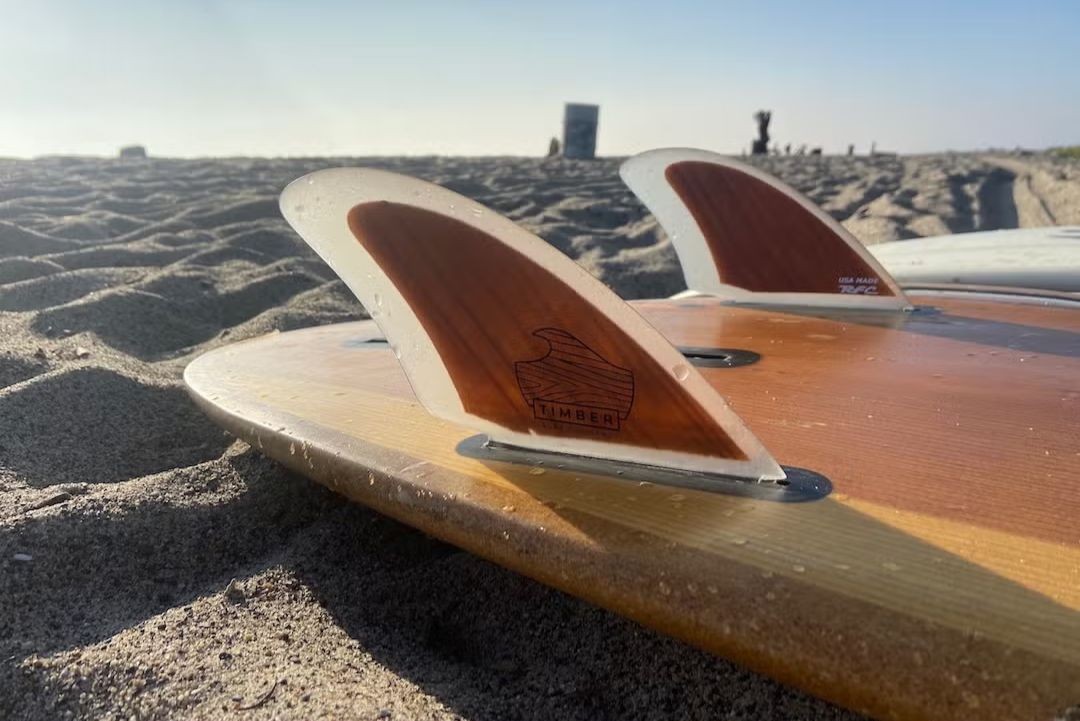
To challenge this contradiction, Timber Surf Co. builds surfboards using reclaimed redwood veneers combined with recyclable EPS foam cores. The redwood forms the outer deck surface, creating a unique appearance that cannot be replicated artificially.
The company also works closely with material suppliers to recover and recycle production waste, extending the life cycle of valuable resources.
The Craft Behind Wooden Surfboards
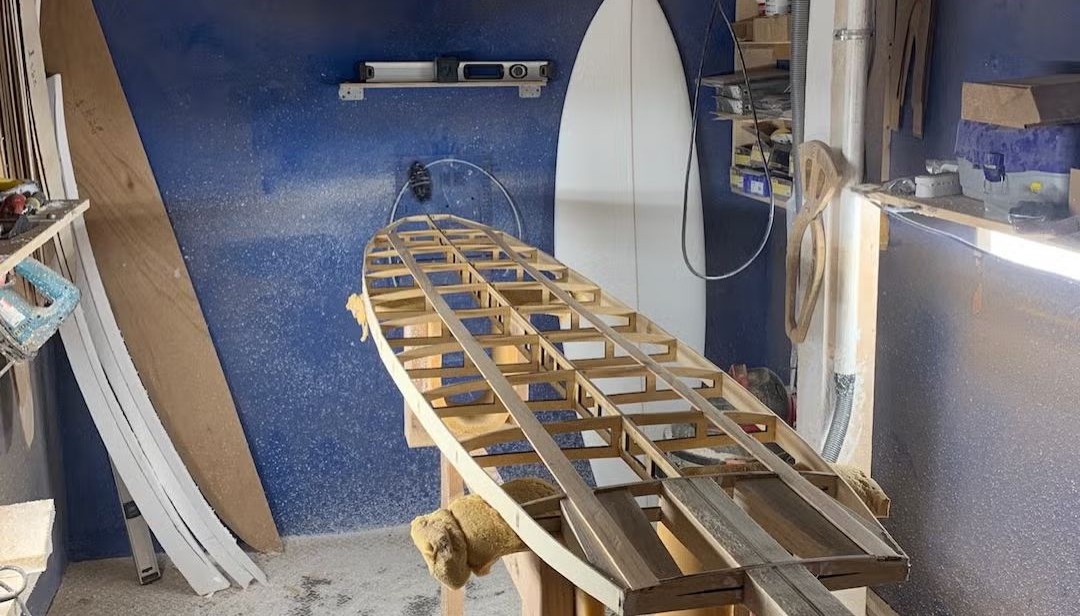
Building a wooden surfboard requires both technology and craftsmanship. The process begins with digital design software, where the board's shape and performance characteristics are carefully developed. Internal frameworks resembling aircraft wings are then fabricated. A central stringer provides longitudinal support, while transverse ribs define the board's form.
Working with wood is often the most demanding stage. The bottom panels must be bent into precise curves under pressure and allowed to dry gradually. Thin wooden strips used along the rails are softened through steaming before being shaped around the nose and tail.
If the material lacks sufficient flexibility, it may crack during bending.
Once assembled, the deck is bonded, pressed, and cured. Craftsmen then refine the surface using planes and sandpaper until the wood's natural grain and color emerge in their full beauty.
Each board becomes a reflection of both engineering precision and traditional woodworking skill.
Surfing Toward a Sustainable Future
From sacred rituals along ancient Hawaiian shores to modern surf communities around the world, surfing has always been deeply connected to the ocean.
Choosing environmentally responsible materials allows this relationship to continue in a more sustainable way. It reminds us that enjoying nature also carries the responsibility to protect it.
At bestwood, we believe that sustainable choices begin with understanding materials and their impact. As your professional timber consultant and partner, we provide FSC®-certified wood products, customized processing solutions, and diverse material recommendations tailored to different applications.
From structural timber and decorative materials to specialty wood products, bestwood helps transform responsible ideas into practical solutions.
GET YOUR BEST WOOD FROM bestwood — Choosing bestwood means choosing a trusted professional partner.
Read More
 From Timber to Stability | Drying Is the Process That Makes Wood Truly Ready
 From Zero to Timber | Building Forests from the Ground Up
Related Product
 OSB
OSBSource:
https://a-multipotentialite.com/traditional-surfboard-history/
https://en.wikipedia.org/wiki/History_of_surfing
https://en.wikipedia.org/wiki/Clark_Foam
https://news.pts.org.tw/article/112772
https://www.timbersurfco.com/
https://www.mensjournal.com/travel/wooden-board-revival-how-timber-surf-co-is-making-a-better-surfboard


