
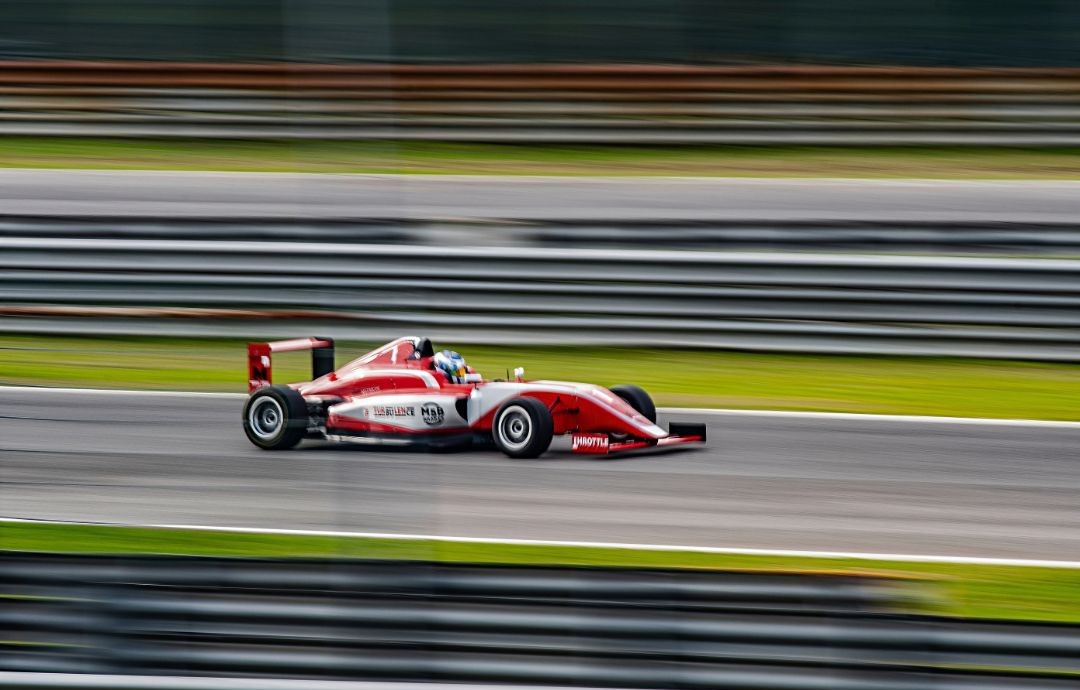
The Wooden Plank Under an F1 Car | A Safety Limit Beneath the Car
The sparks on the track, the plank under the car—F1 safety regulations were once closely connected to wood.
Contents :
1. The Sparks Under an F1 Car
2. A Safety Reform After a Tragic Weekend
3. What Is the Plank?
4. A Strict Measurement That Can Decide a Race
5. The Material Changed, but the Standard Remained
6. Professional Wood Solutions from bestwood
Where Does Our Wood Come From?
When an F1 car travels at high speed through a corner or over an uneven section of track, the bottom of the car may scrape against the road and produce a trail of bright white sparks. This is especially noticeable during night races.
Those sparks come from an area around a long board called the Plank, which runs along the center of the underside of the car. Metal skid blocks are fitted around the Plank. When the car runs low enough for these metal parts to touch the track, friction creates the sparks we see during a race.
Interestingly, the word “Plank” literally means a flat piece of wood—and the original F1 Plank was indeed made from a wood-based material.
After F1 introduced flat-bottom regulations, teams tried to run their cars as low as possible to improve grip and aerodynamic performance.
However, when the bottom of a car frequently touched the track, the car could become less stable.
At the 1994 San Marino Grand Prix, motorsport experienced a tragic weekend.
During qualifying, Roland Ratzenberger suffered a front-wing failure. His car lost control and crashed into a concrete wall, resulting in his death.
The following day, three-time World Champion Ayrton Senna lost control while cornering and crashed into a wall. He also died from his injuries.
Following these accidents, the FIA quickly introduced a series of safety reforms.
Beginning in July 1994, F1 cars were required to install a 10 mm-thick Plank beneath the floor. The purpose was to control how low the cars could run during a race.
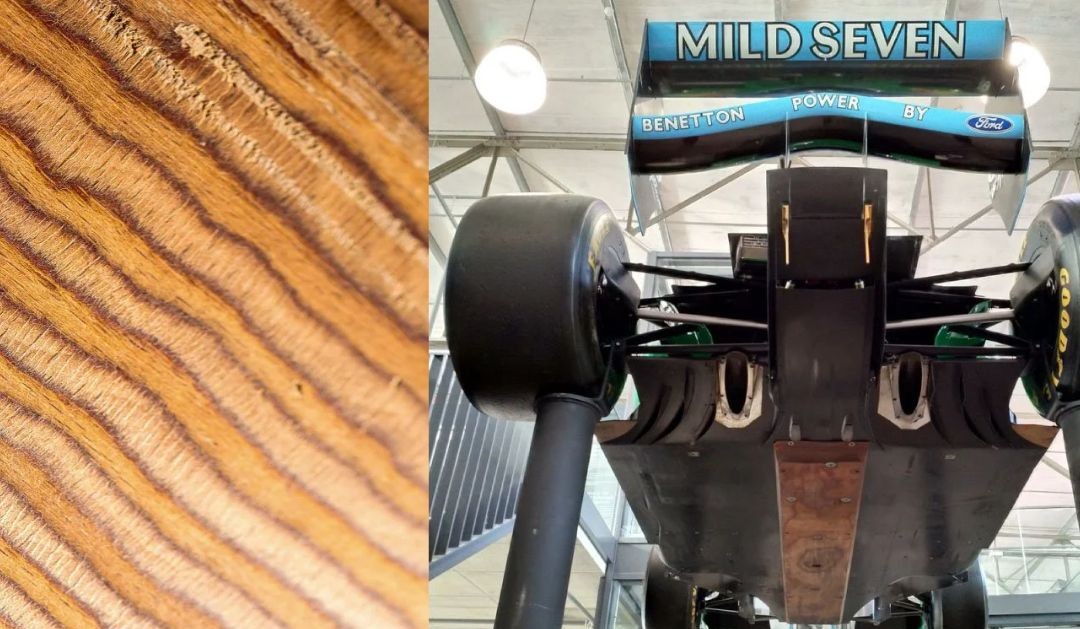
The original Plank used a high-density wood composite.
Thin layers of beech wood were combined with resin, stacked together, and pressed under high temperature and pressure.
This process created an extremely dense and durable material suitable for the demanding environment underneath a racing car.
The finished material offered approximately half the strength of steel while weighing only about 20% as much as steel.
This combination of strength, durability, and relatively low weight made the material suitable for this unusual motorsport application.
The Plank is installed along the centerline beneath the floor, making it one of the areas of the car closest to the track.
As the car runs through a race, contact with the road gradually wears the Plank down.
After the race, officials measure its remaining thickness. If the wear exceeds the permitted limit, it indicates that the car was running too close to the track.
And even a very small difference can change the final result. At the 2025 Las Vegas Grand Prix, McLaren drivers Lando Norris and Oscar Piastri originally finished second and fourth.
Both cars were later disqualified because their Planks had worn beyond the permitted limit.
The minimum thickness measured on Norris's car was 8.88 mm, while Piastri's car measured only 8.74 mm.
In F1, even a difference measured in fractions of a millimeter can determine whether a car passes technical inspection.
The Material Changed, but the Standard Remained
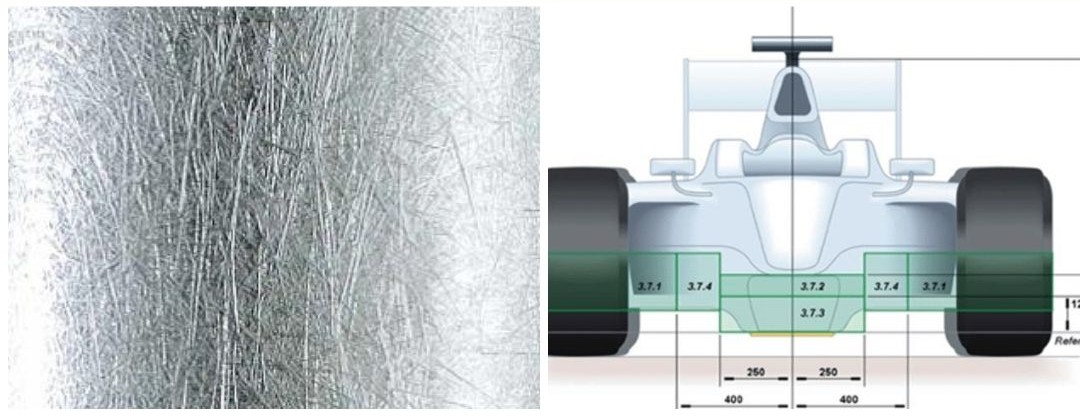
As material technology advanced, F1 moved away from the original wood-based Plank toward composite materials made with glass fiber and resin.
These modern materials provide more consistent wear performance and are better suited to the continuous high-speed contact and friction experienced underneath today's racing cars.
The material has changed, but the name “Plank” remains.
There is another interesting connection to its wooden origin.
The 2026 FIA Technical Regulations require the Plank material to have a specific gravity between 1.3 and 1.45—a range that follows the density characteristics of the earlier wood-based Plank.
In other words, wood is no longer the material underneath a modern F1 car, but the characteristics of the original Plank still have a connection to how this component is defined today.
From a racing car to everyday construction, the performance of any wood product depends on both material selection and processing.
bestwood is your professional timber consultant and partner.
From specialty wood panels and structural timber to customized cutting and processing, we help turn material requirements into practical solutions.
GET YOUR BEST WOOD FROM bestwood — Choosing bestwood means choosing a professional partner you can trust.
Read More
Related Product
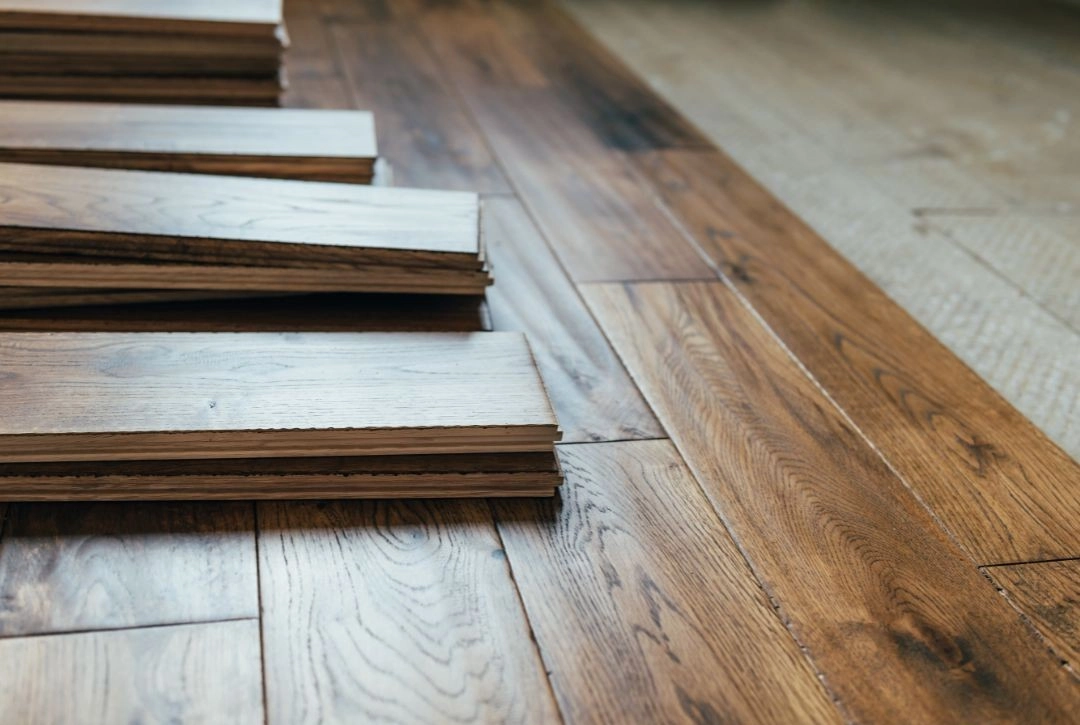
 softwood lumber
Source:
1994 年伊莫拉事故後的安全改革、德國站起安裝 Plank:https://www.formula1.com/en/latest/article/imola-94-and-the-legacy-of-improved-safety.5P8zqEzNjKzYw8qdckoYFF
1994 年 7 月德國站起強制安裝 Plank:https://www.motorsport.com/f1/news/senna-imola-1994-f1-safety/4787047/
Ratzenberger 排位賽事故(前翼斷裂):https://en.wikipedia.org/wiki/Roland_Ratzenberger Senna
正賽事故:https://en.wikipedia.org/wiki/Death_of_Ayrton_Senna
平底盤規則與 Plank 的由來:https://www.bilibili.com/opus/549756840392261433 Plank
位置、尺寸與金屬滑塊:https://f1mix.com/why-do-f1-cars-have-a-wooden-plank
Plank 位置、10mm 厚度、改用玻璃纖維材料:https://en.wikipedia.org/wiki/Skid_block
壓縮山毛櫸製法、強度為鋼的一半、重量為鋼的五分之一:https://permalideho.co.uk/products/
壓縮山毛櫸技術規格:https://www.askmotorsport.fr/pdf/jabroc.pdf
早期木質 Plank 比重 1.3–1.45:https://www.pegasusautoracing.com/productselection.asp?Product=6180
山毛櫸原料、改用玻璃纖維複合材料的原因:https://www.autosport.com/f1/news/the-simple-f1-plank-rule-that-is-more-complicated-under-the-surface/10787127/
2025 拉斯維加斯站 Norris、Piastri 取消成績:https://www.formula1.com/en/latest/article/norris-and-piastri-disqualified-from-las-vegas-gp-as-mclarens-fail-post-race.10uHwsN6mLfCNoZ6nKQvPy
2025 拉斯維加斯站名次與取消成績:https://ca.sports.yahoo.com/news/lando-norris-oscar-piastri-disqualified-134815916.html
2025 拉斯維加斯站 Plank 量測數值:https://www.espn.com/f1/story/_/id/47069893/las-vegas-gp-mclaren-lando-norris-oscar-piastri-risk-disqualification
2026 FIA 技術規則 Plank 比重規定:https://www.fia.com/sites/default/files/fia_2026_formula_1_technical_regulations_issue_8_-_2024-06-24.pdf


